
Carpet tiles are squares of carpet that you lay one by one, instead of one big roll. In a basement, this helps: if one area gets stained or wet, you can change a few tiles instead of the whole room. This guide explains how carpet tiles are made, how they are laid, and what the concrete needs first.
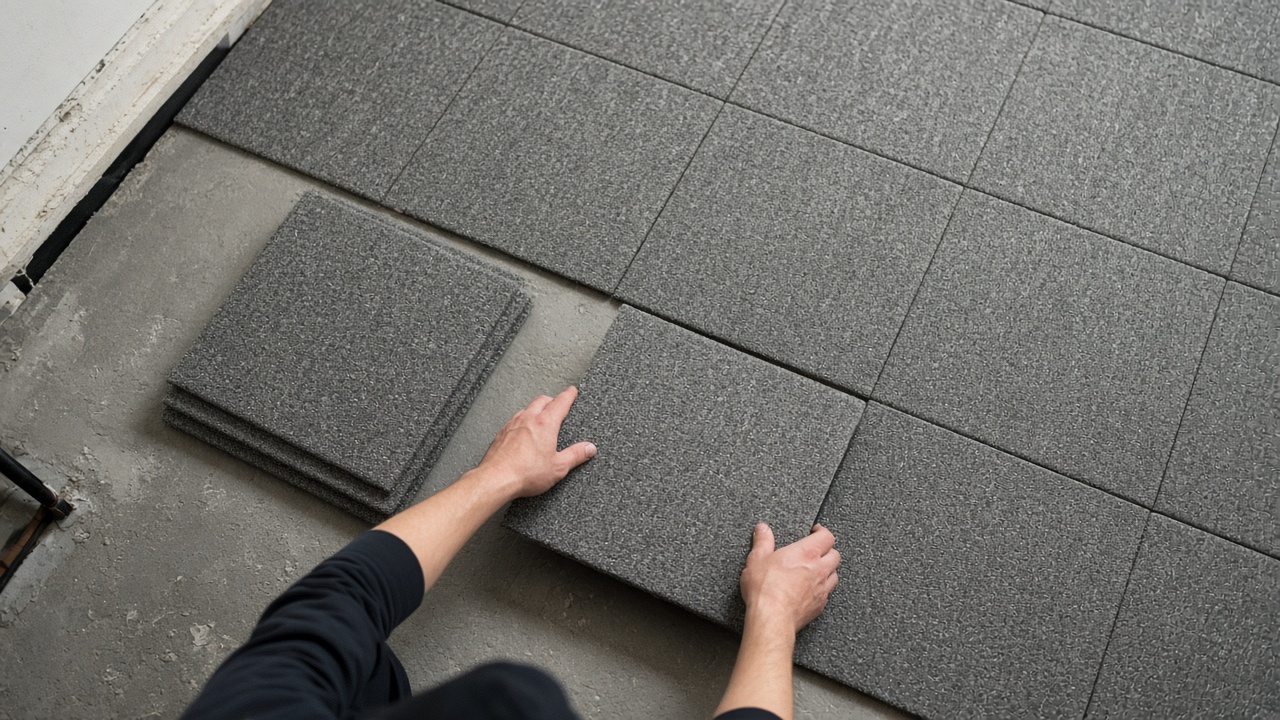
The FloorBox Carpet Tiles page says they make a modular soft floor for basements and other rooms, and that they help with flexible layouts and future replacement. Here is one example, the Next Floor Carpet Tiles Foundation Chestnut 20" x 20":
The Foundation page lists the layout as "Quarter-Turn". This means you turn each tile a quarter turn (90°) from the one next to it. The pile runs in different directions, so the seams are harder to see and the floor gets a soft checkerboard look.
The Foundation page says to use it with an adhesive. The Fuzion Flooring Carpet Tiles Adhesive FuzBond 1 gal is one choice made for carpet tiles. Its page says:
More glues are in Carpet Adhesives.
Glue needs a dry, clean, flat floor. Test the slab for moisture first. The American Moisture Test Single Calcium Chloride Concrete Moisture Test measures the moisture coming out of the surface. More tools are in Moisture Testing Tools. Fill cracks and low spots with a product from Floor Patch. Our guide What Is a Subfloor? explains these checks step by step.
At the walls you will need to cut tiles. The Crain 675 24" Carpet Tile Cutter cuts carpet tiles up to 24 in. straight or 18 in. on a diagonal. It comes with a guide for repeat cuts, which helps when every tile along a wall is the same size.
Both are soft and warm underfoot. Carpet tiles make sense if you want to change a small area later. A roll of carpet makes sense if you want a thick pad under it. Our guide Wall-to-Wall Carpet or an Area Rug? helps with that choice.