
Laminate is a common floor. But when you work out how to clean laminate floors, the cleaner matters: the wrong one can damage it. The tricky part: many "natural" or "heavy-duty" household products are on the list of things to avoid.
Where does this list come from? Not from internet tips. It comes from a laminate maker's own care guide: Beaulieu's Laminate Flooring Care and Maintenance guide (2024). FloorBox attaches it to the Beaulieu Gallo Xtra Agostino laminate page. Your laminate may come from another brand. If it does, read that brand's care guide too. Its rules come first.
Beaulieu's guide says do not use:
The guide gives the reason in one sentence: these products "could damage the flooring, leave a discoloring residue, cause swelling, and warping that voids the warranty."
So it's not only about looks. Using one of these products can cost you your warranty. The guide also asks you to keep a list of the cleaners you use on the floor. It lists this as one of the steps to keep your warranty.
Only a little. The guide says to never wet-mop or flood the floor with water or other products. A lightly damp mop is fine for cleaning a spot.
There's one exception. The guide says water-resistant laminate can take more moisture and can be wet-mopped. Even then, you must wipe up any standing water quickly. So check your floor's spec table:
Not sure what "water resistant" and "waterproof" really mean? Read Waterproof or Water-Resistant Flooring.
Here's what the same guide recommends:
The Woodpecker laminate, hardwood and parquet floor cleaner spray (775 ml) is made for laminate, hardwood and parquet. Its product page says it's environmentally friendly and biodegradable. It also says it leaves no residue, needs no rinsing and dries streak-free.
Its technical data sheet says:
One thing to know: this cleaner's data sheet doesn't list its pH. Some care guides ask for a pH-neutral cleaner, like Beaulieu's does. If yours does, contact us before you pick a cleaner.
The guide also lists easy habits:
Still choosing a laminate? Read How to Choose Laminate Thickness and AC Rating. Questions about your floor? Contact us.
Can I use vinegar to clean my laminate floor?
Beaulieu's laminate care guide says not to. Vinegar is on its list of products to avoid, along with bleach and ammonia.
Can I use a steam mop on laminate?
No. Beaulieu's guide says not to use steam mops on its laminate.
How do I clean laminate without leaving streaks?
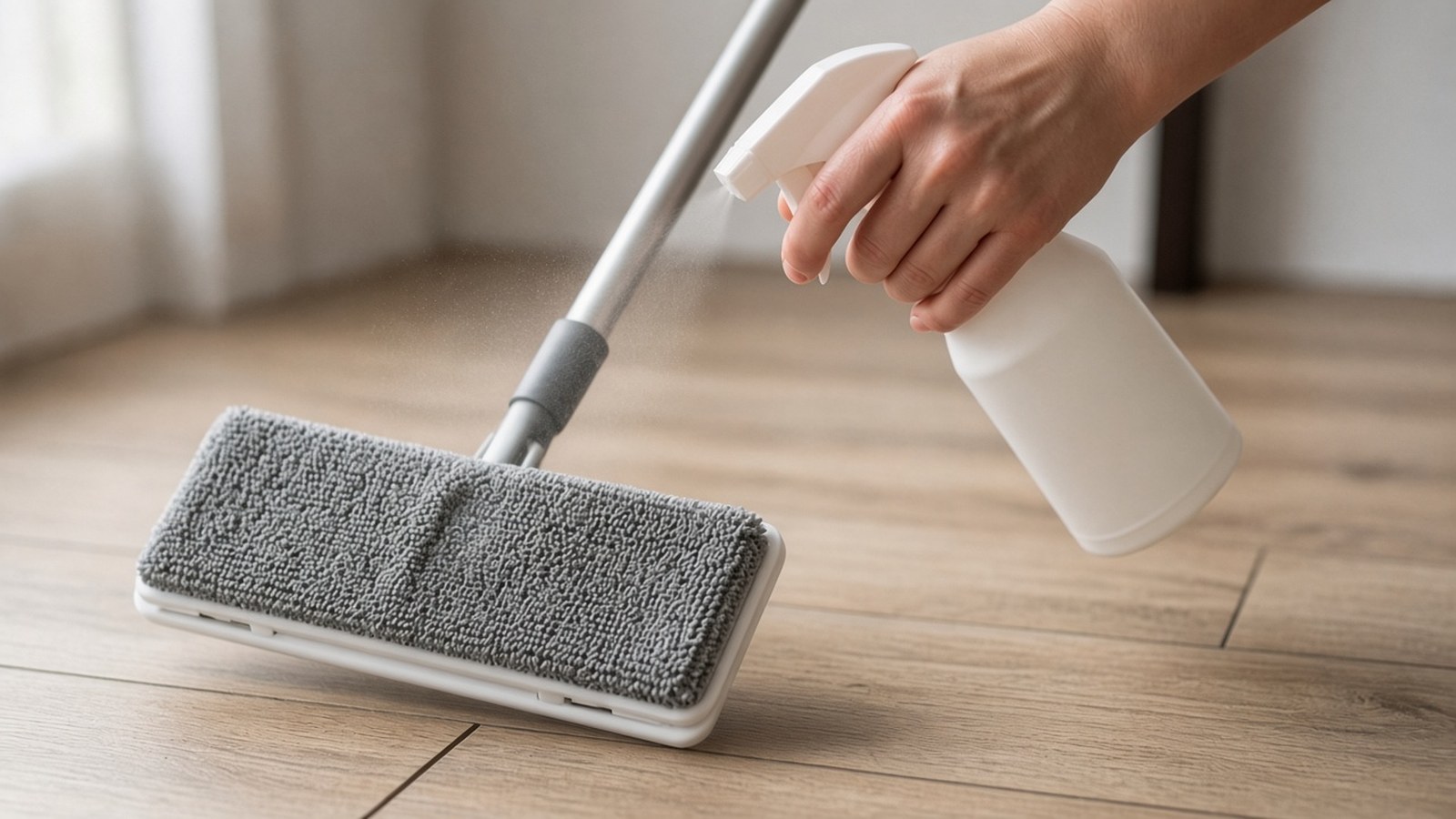
Use a no-rinse cleaner made for laminate, sprayed on a microfibre cloth or mop, not on the floor. Avoid wax, polishes, oil soaps and anything that leaves a residue.
Can I wet-mop my laminate floor?
Not unless your laminate is water-resistant. Beaulieu's guide says never to wet-mop laminate. Use a lightly damp mop instead. The guide says water-resistant laminate, like the Beaulieu Gallo Xtra Agostino laminate, can be wet-mopped, as long as you remove standing water quickly.
How do I choose a cleaner for my laminate floor?
Start with your laminate maker's care guide. Then read the cleaner's label and data sheet. For example, the Woodpecker laminate, hardwood and parquet floor cleaner spray (775 ml) lists laminate in its uses and needs no rinsing. Test any cleaner on a small spot first.