
The heating is on, and now you can see thin gaps between some of the boards in your hardwood floor. They were not there in the summer. Is the floor defective? Lauzon says gaps typically appear when the air in the house is too dry. Here is what is happening and what you can do about it.
Short answer: Wood reacts to the air around it. When the air in your home gets dry, the boards lose moisture and shrink a little, which opens small gaps between them. This is common in winter, especially in homes with dry heat. The fix is to bring the humidity in your home back to the range your floor needs.
Which humidity range? Follow the range in your own floor's guide. Lauzon gives different ranges for different constructions, so check the documents for your exact floor: on FloorBox, they are listed under Documents on each product page, like this Lauzon Expert Essential floor. For example, the Lauzon specification sheet for its Essential, Décor and Lodge series (2-ply engineered) asks for 30% to 80% relative humidity. Other brands give their own range in their installation or care guide.
Wood is a natural material. Lauzon, a hardwood maker sold on FloorBox, explains it simply: too much moisture makes wood expand, and not enough makes it contract.
Lauzon says gaps usually appear when the humidity in the house falls below the recommended level: the boards dry out, shrink slightly, and small gaps open between them. Lauzon adds that you often see this in winter, especially in houses with dry heat.
Small gaps that show up in winter are your floor reacting to dry air. Lauzon's answer to "why have gaps appeared?" is about humidity, not about a defect, and its fix is to raise the humidity in the home.
Lauzon says solid hardwood is more susceptible to changes in its environment. An engineered floor is built from layers, which makes it more stable. If you are still choosing a floor, our guide on hardwood vs engineered flooring explains the difference.
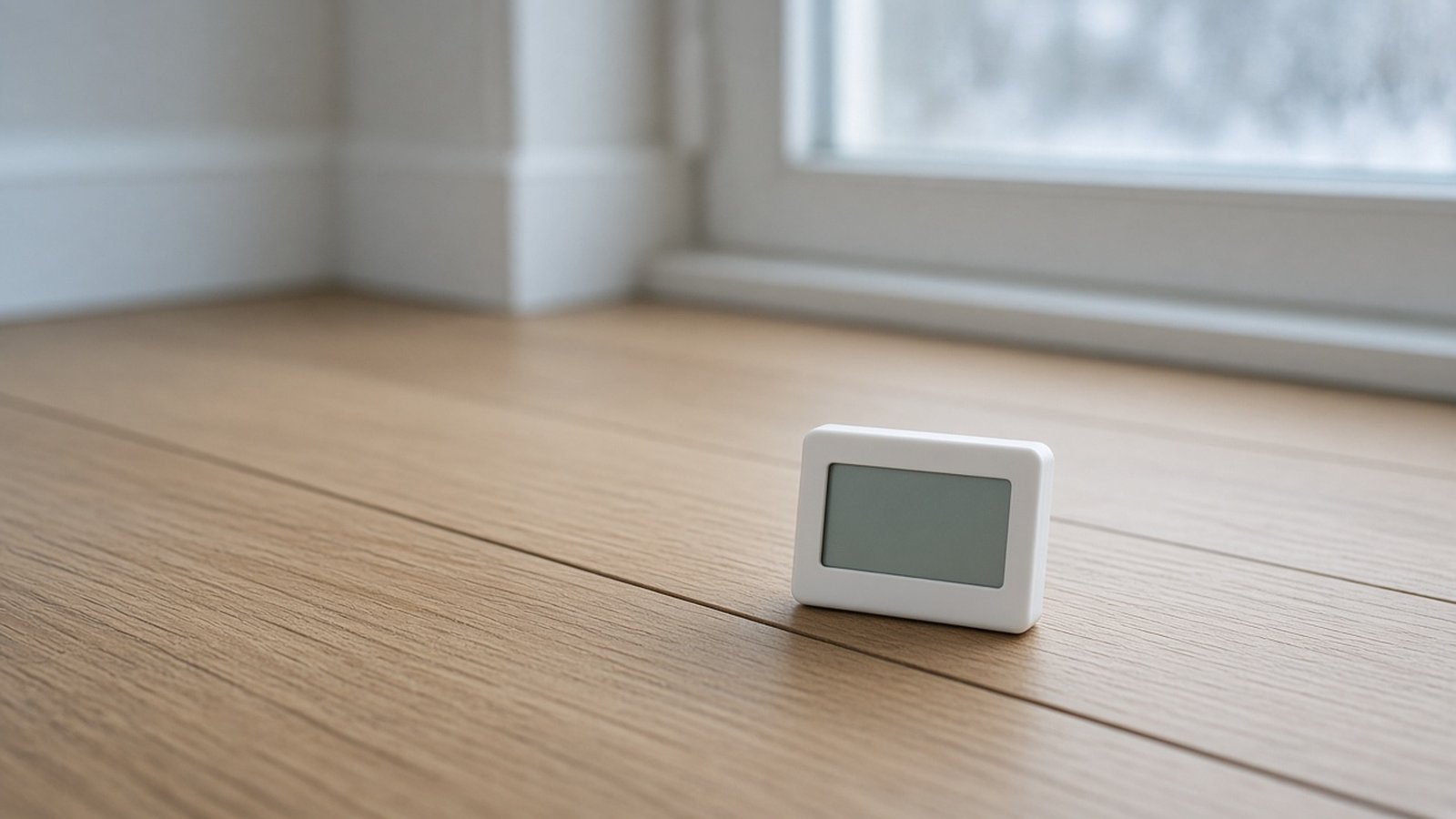
Measure it. A thermo-hygrometer shows the relative humidity of the room. The Wagner TH-200 thermo-hygrometer sold on FloorBox measures temperature, relative humidity and dew point, before, during and after a flooring installation.
Put it in the room with the hardwood floor, away from a heat vent, and check it for a few days. Compare the number with the range in your floor's guide.
Next step: browse hardwood and engineered hardwood floors, or see the Lauzon collection. Choosing a species? Read oak or maple.
Why do gaps appear in hardwood floors in winter?
The air in a heated home gets dry. The boards lose moisture and shrink a little, which opens small gaps. Lauzon says this is often seen in winter, especially in houses with dry heat.
What humidity should I keep for a hardwood floor?
It depends on the floor, so follow the range in your floor's own guide. For example, Lauzon's specification sheet for its Essential, Décor and Lodge series (2-ply engineered) gives 30% to 80%.
Do I need a humidifier for my hardwood floor?
It depends on your climate and heating. Lauzon says that in cold, dry regions where homes are heated in winter, a humidifier can be very helpful.
Does engineered hardwood gap less than solid hardwood?
Engineered hardwood is built from layers, which makes it more stable, and Lauzon says solid hardwood is more susceptible to changes in its environment. Both still need the humidity range their maker recommends.