
Straight planks side by side are one look. Zigzag patterns are another. Two names get mixed up all the time: herringbone and chevron. They are not the same cut. Below is the difference in plain words, then a Canadian-made engineered example from FloorBox, then a short note on parquet.
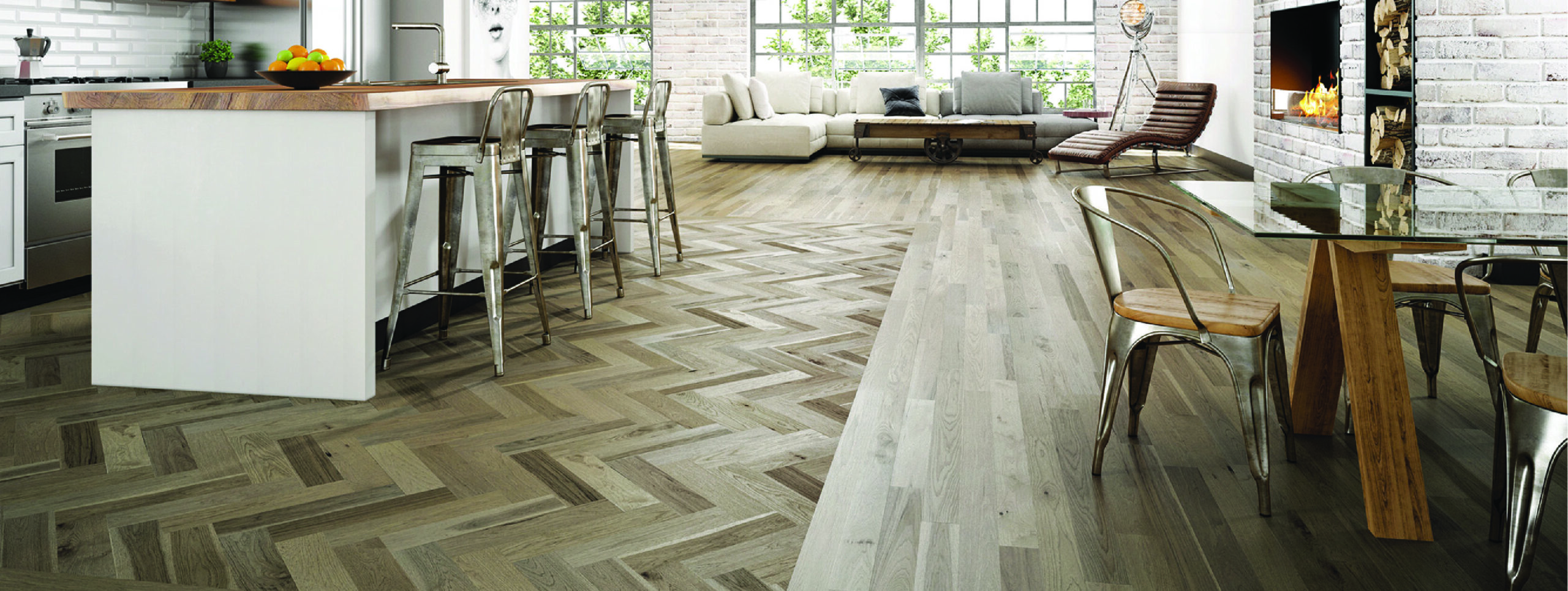
Here is how to tell them apart:
If the ends are square and the joints look stepped, you are looking at herringbone. If the ends are mitred into a sharp V line, you are looking at chevron. Product names on FloorBox sometimes keep the English word Herringbone even on French pages — that is the pattern name on the box.
The Lauzon Collection Engineered Hardwood Bastille Herringbone 3-1/4" x 7/16" lists:
Shop more in Engineered Hardwood. Engineered means a real wood wear layer on a stable core — here the core detail lists Douglas fir — so the top is wood you can see and feel, in a herringbone pattern. For how engineered compares with solid wood, read Hardwood Flooring vs Engineered Flooring.
The Bastille Herringbone page lists four installation methods: nailed, stapled, glued or floated. Follow the maker's instructions for your subfloor and humidity range (35–65% on this page).
Yes — "parquet" here means a pattern of wood pieces arranged into a design (including herringbone-style layouts), not a dusty old basement leftover. People still choose patterned wood floors; Bastille Herringbone is a current engineered example made in Canada. If someone says "parquet" in a shop, ask whether they mean a patterned wood floor or an old glued block floor — the word is used both ways in casual talk, but in this post it means the pattern.