
You're redoing your kitchen. The wall behind the stove is the one that gets dirty first, because it gets splashed every time you cook. So when you pick a backsplash for that wall, don't only ask "what looks nice?" Also ask "what will I be cleaning every week?"
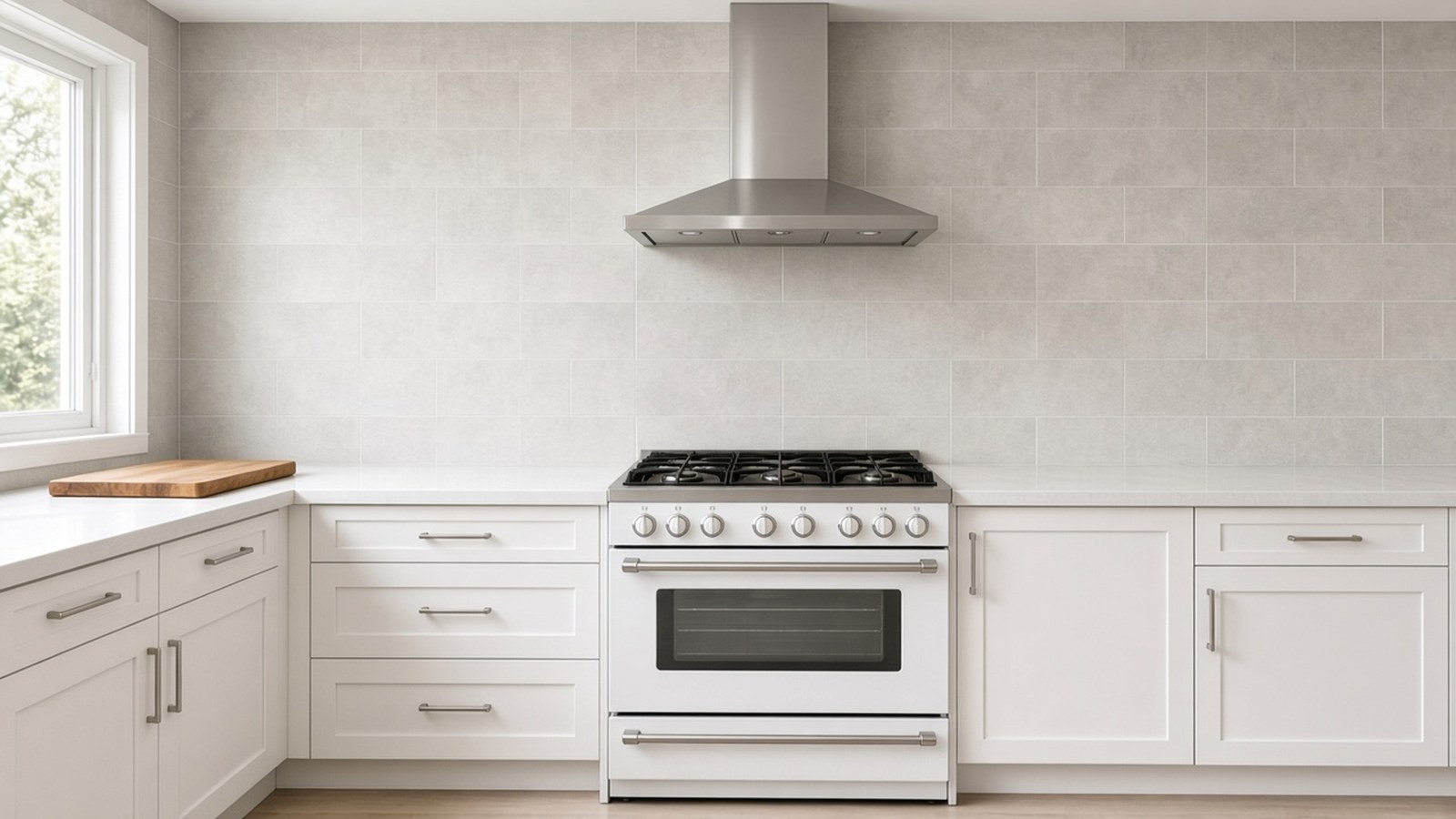
This guide compares two common choices: large tiles and small mosaics. It explains each line on the tile page in plain words. It also helps you decide whether to stop at the hood or go all the way to the ceiling.
It has two jobs:
The tile itself is usually easy to wipe. The grout lines take more work. Grout is the filler in the gaps between tiles. So the size of the tile matters. Bigger tiles mean fewer grout lines, and fewer grout lines mean less grout to clean.
Large tile. One 12" x 24" tile covers 2 square feet on its own. You get a calm, smooth wall with only a few grout lines.
Mosaic. A mosaic is a sheet of many small pieces glued to a mesh backing. You put up the whole sheet at once. A mosaic gives you more pattern and colour. It also gives you many more grout lines to clean.
Neither one is wrong. If easy cleaning is your top priority, go with larger tiles. If you want a feature wall, a mosaic gives you more design choices. Both are in Wall Tiles and Mosaic.
Take the Centura Subway White porcelain tile, 12" x 24". "Subway" is the name of the collection. It is not the small brick-shaped tile some people picture: its spec table lists a concrete look. Here's what its page lists, and what each line means:
One note: the spec table lists the colour as "Beige," while the maker's colour name is "White." If the exact shade matters, contact us before you order.
Take the MSI Tarvos Interlocking Gray-Dark glossy glass mosaic, 12" x 12". Its page lists:
The page says it is "perfectly suited for a kitchen backsplash."
It's a design choice. There is no single right answer. Here are the two usual options:
Going to the ceiling means more tile, more cuts around the hood and more time. Whichever you choose, measure the area first. How to Calculate Square Footage for Flooring works for walls too: measure width times height. On a tall wall, large tiles also mean fewer grout lines to keep straight.
The tile pages in this guide don't list heat resistance for the wall behind a stove. So this guide makes no heat claim. Check your stove's installation manual to see what it needs on the wall behind it. Building codes also have fire-safety rules for walls close to a cooktop, so check the code where you live too. Still unsure? Contact us and we'll look at it with you.
Grout colour changes how the wall looks. A grout close to the tile colour makes the grout lines fade. A contrasting grout shows off the pattern. The Centura Subway White porcelain tile, 12" x 24" page lists a suggested grout colour. How to Grout Tile walks you through the job.
How do I choose between large tiles and a mosaic for behind my stove?
If you want the easiest wall to clean, choose large tiles. They have fewer grout lines. If you want more pattern or colour, choose a mosaic sheet. It will have more grout lines to clean.
Can I use a floor tile on my kitchen backsplash?
Yes, if the tile page says it can go on walls. The Centura Subway White porcelain tile, 12" x 24" lists "Use On: Wall & Floor."
Do I need a special mortar for a glass mosaic backsplash?
Follow the tile page. The MSI Tarvos Interlocking Gray-Dark glossy glass mosaic, 12" x 12" page says to use a latex-modified thin-set.
How much tile do I need for a backsplash?
Measure the width and height of each section of wall, multiply, and add them up. Then compare that number with the coverage per box on the tile page.
Should my backsplash go to the ceiling?
It's your choice. Going to the ceiling makes the wall look like one surface. Stopping at the hood or cabinets uses less tile.