
Tile is hard and does not bend. The floor under it moves a little over time, as the concrete or wood dries, warms and cools. That movement can crack the tile or the grout. An uncoupling membrane is a thin plastic layer between the floor and the tile that soaks up this movement. This guide explains how it works, using Schluter DITRA as the example.
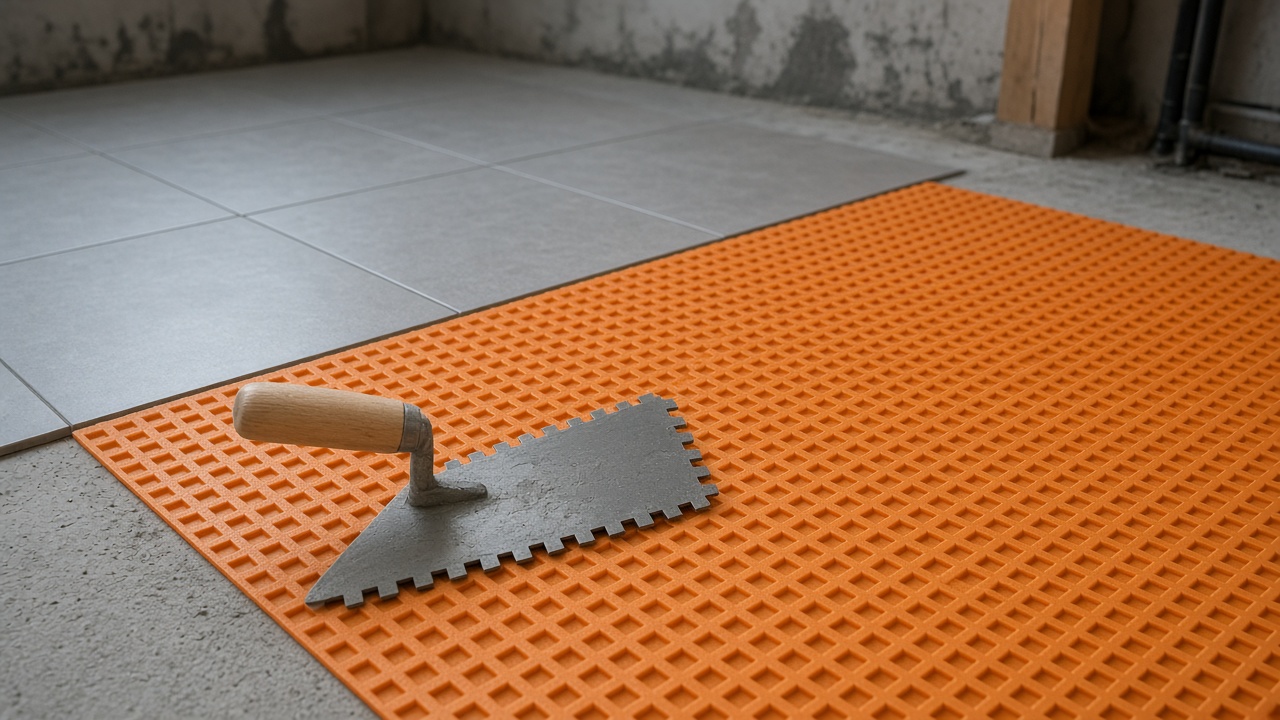
It means the tile is not locked straight to the floor. The FloorBox page for Schluter DITRA Uncoupling and Waterproofing Membrane 150 sq ft says the membrane prevents cracking of tile and grout. Its open rib structure lets the floor below move a little without pulling the tile with it.
The same page lists four jobs:
Yes. The DITRA page says it can be installed over concrete, plywood, OSB, gypsum, existing vinyl floors and radiant floor heating. It is 1/8 in. (3 mm) thick, so it adds very little height. That helps where the tile meets a lower floor at a doorway. Check the slab first: our guide What Is a Subfloor? explains how.
All options are in Uncoupling & Underfloor Heating Membranes.
The membrane has a fleece on the bottom. You set it in thin-set mortar on the floor. Then you lay the tile on top with mortar that fills the small square cavities. The DITRA page says you can tile right away. Two helpful products:
If you are tiling a basement floor, consider one. It helps protect the tile from cracks caused by a moving floor, and it adds a waterproof layer. If your slab has low spots, level it first; our guide on self-levelling underlayment explains how.