
A self-levelling underlayment is a powder that you mix with water and pour on the floor. It flows out and finds its own level, so it fills dips and leaves a flat surface. In a basement, it fixes a slab that is too uneven for a new floor. This guide explains when you need it, how it works and what to prepare.
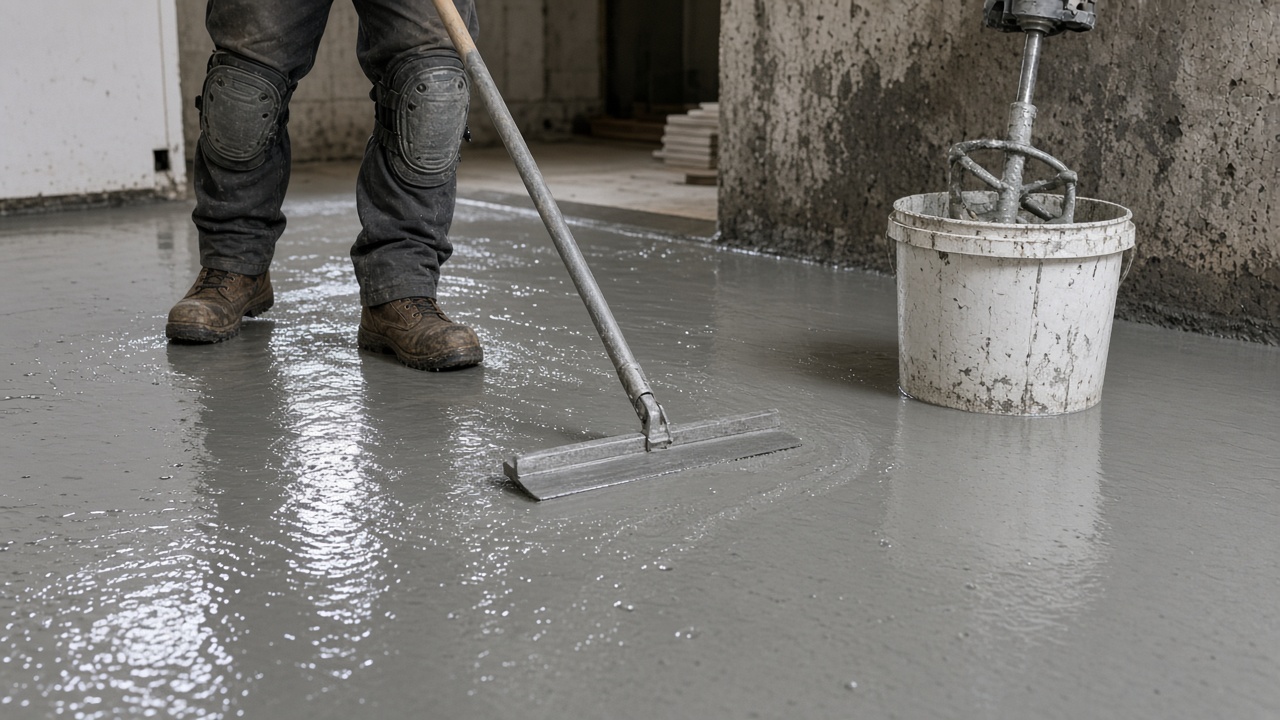
When it is not flat enough for the floor you picked. Each floor maker gives a flatness limit in its installation guide, so check the one for your floor. Small dips can be filled with a floor patch. When the low areas are wide, a self-levelling underlayment is the better tool. Our guide What Is a Subfloor? shows how to check the slab first, including moisture.
Here is what the page for the CustomTech Self-Leveling Underlayment TechLevel 100 50 lb says:
Another example is the Tec Level Set 300 Self-Leveling Underlayment 50 lb. Its page says you can walk on it in 2 to 3 hours, it can go up to 2 in. thick, and it can be thinned out to meet the floor around it. More choices are in Levelers.
Usually, yes. A primer helps the leveler bond to the concrete. The Ardex P 51 Primer 3.79 L is a solvent-free primer for Ardex underlayments over absorbent concrete. Use the primer the leveler maker asks for. Options are in Flooring Primers.
Mix fast and spread evenly. You need:
Once it is hard and dry, you can lay your new floor on it. Check the leveler page and your floor guide for the waiting time. If tile is going on top, our guide on uncoupling membranes explains what can go between the leveler and the tile.