
You're finishing your basement. The store shows you many kinds of floor, and every one is called "durable." But that word can mean different things. Some floors resist scratches. Some resist water. Some resist wear from people walking on them every day. No floor is the best at all three.
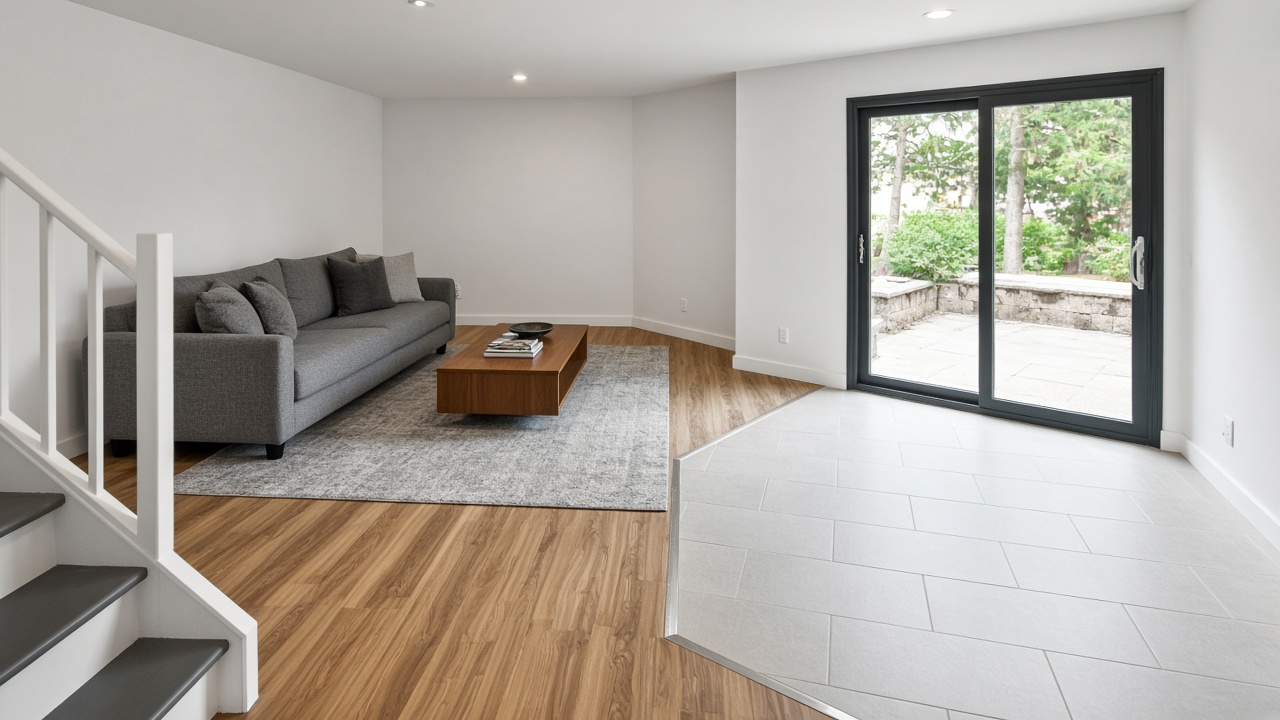
This guide covers the main types of flooring. For each one, it explains what "durable" means and which line on a FloorBox product page gives you the answer.
It usually means one of three things:
A floor can be very good at one of these and weak at another. So ask: durable against what? Find the biggest risk in your room first. Then pick the floor that handles that risk best.
Most home floors fit into a few families. You can see them all in Flooring:
Below, most types get a real FloorBox product as an example. That way, you can read the label yourself.
Vinyl plank has a printed pattern on top. A clear layer, called the wear layer, covers it. The wear layer takes the scuffs. The thicker it is, the longer the floor can wear before the pattern shows.
Take the Planchers 1867 Evolution Magma XL Helka vinyl plank. Its page lists:
What that means for you: the Helka is a good pick when water is your main worry. Its wear protection comes from that thin top layer. So put felt pads under your furniture. To learn more, read What Are the Types of Vinyl Flooring? and How Does Click Vinyl Flooring Lock Together?
Laminate has a wood-based core. On top, there is a photo of wood and a hard, clear surface. Its durability label is the AC rating. It tells you how well the surface stands up to wear. A higher number means it can take more foot traffic.
The Planchers 1867 Concerto XL Baryton Oak laminate is rated AC3 – Heavy Residential / Light Commercial. It is 12 mm thick. The same page says Water Resistant: No and Waterproof: No.
What that means for you: this laminate handles normal family traffic well. But don't put it where water can sit on the floor. Our guides How Do I Choose Laminate by Thickness and AC Rating? and Should I Choose Laminate or Vinyl Planks? tell you more.
Porcelain is a dense type of ceramic tile. Tile pages show three useful labels:
The MSI Arterra Pavers Argento Travertino porcelain tile lists PEI 4 and a Mohs scratch rating of 6. Its water absorption is under 0.5%, and its Chemical Resistance is Pass. It is a thick 20 mm paver.
What that means for you: this porcelain is the only product in this guide with a scratch rating on its page. It also soaks up almost no water. The downside is that tile feels hard underfoot. To learn how the two differ, read our guide on ceramic and porcelain. You can also browse Tiles.
Travertine is a real stone. The Anatolia Ivory Travertine honed tile is rated for walls and floors. It can go indoors and outdoors, in homes and in businesses.
What that means for you: stone has a natural look, and no two tiles are the same. If scratches are your biggest worry, compare it with the porcelain above before you choose. What Is Travertine, and Is It a Good Choice for Floors? explains it in detail.
Engineered hardwood has a layer of real wood on top of a stable core. Here, read two labels: the wear layer (how thick the real wood on top is) and the finish.
The Lauzon Bastille engineered hardwood lists:
What that means for you: you get real wood with a thick top layer. But wood needs the air in the room to stay in that humidity range. In a basement, plan for a humidifier or a dehumidifier. To learn more, read how hardwood and engineered flooring differ, and see our guide to herringbone and chevron patterns.
These two meet different needs. Linoleum is a natural floor that comes in sheets or tiles. What Is Linoleum Flooring? explains where it fits. For carpet, the fiber matters most. How Do I Choose a Carpet, and Which Fiber Should I Pick? walks you through it.
It depends on what you need it to resist:
| If your main worry is... | Read this line on the product page | Example on FloorBox |
|---|---|---|
| Scratches | Mohs scratch rating | Arterra porcelain: Mohs 6 |
| Foot traffic on laminate | AC rating | Concerto XL: AC3 |
| Wear on vinyl | Wear layer thickness | Helka: 12 mil (0.3 mm) |
| Water | Waterproof: Yes | Helka vinyl plank |
| Real wood that lasts | Wear layer of real wood | Bastille: 3.2 mm |
In this guide, the porcelain tile is the only product with a scratch rating on its page, and it soaks up almost no water. For a damp basement, look for "Waterproof: Yes" first. Waterproof or Water-Resistant Flooring explains why.
Which type of flooring should I choose for a basement that can get damp?
Choose a floor marked "Waterproof: Yes" that is also rated for below grade (below ground level). The Helka vinyl plank has both. Our subfloor guide explains what goes under it.
Is porcelain tile more durable than vinyl plank?
Against scratches, yes. The Arterra porcelain lists a Mohs rating of 6. Against water, both do well. The porcelain soaks up less than 0.5%, and the Helka vinyl is waterproof. Vinyl is softer underfoot, and the Helka has a foam pad attached.
What does the AC rating on laminate mean?
It tells you how well the surface resists wear from walking. AC3 is made for busy homes. Our AC rating guide explains each level.
Is any floor completely scratch-proof?
No. Some floors resist scratches better than others. What Is the Best Flooring for a Dog? shows which labels help.