
You just put down a new floor. It looks great, except for the old metal vent covers. They are scratched, the paint is chipped, and they really stand out. Or maybe you are about to install the floor, and you are wondering if the vents should change too.
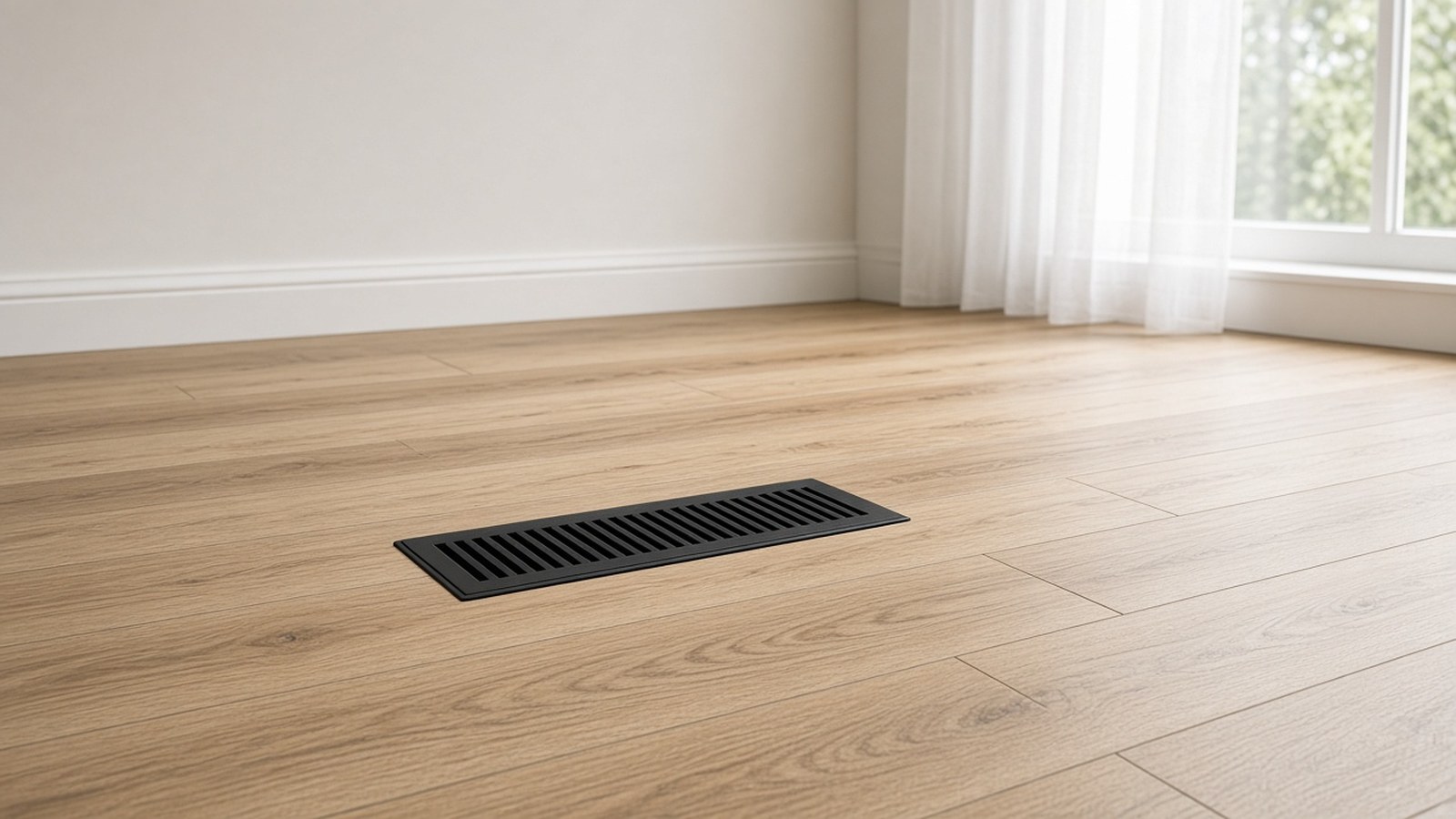
A floor vent cover (also called a floor register or a grille) is the piece that sits over the hole where warm or cool air comes into the room. Replacing it is a small job, but two things trip people up: the size, and the type. Here is how to get both right, with real products sold on FloorBox.
You can see every model in our floor vent covers category.
The size on a vent cover is the size of the hole in the floor, not the size of the cover you see. That hole is called the duct opening.
Here is how to measure it:
Common opening sizes you will see on FloorBox vents are 2 x 12, 3 x 10, 4 x 10 and 4 x 12. The Aria Vents Framed Floor Vent Lite, for example, comes in all four.
Then check the outside size. The visible part of the cover is often bigger than the hole. The Biyork Nouveau 8 hardwood floor vent fits a 4 x 10 inch opening, but it measures 6.75 x 13 inches on top. That matters if the vent sits close to a wall, a cabinet or a door.
If your opening doesn't match any size, or the hole is damaged, contact us before you order.
The big question is when the vent goes in: before the new floor, or after.
Aria Vents Framed Floor Vent Lite
Aria Vents Flush Floor Vent Lite
Not sure what a subfloor is? Our post on what a subfloor is explains it.
Inte-Grates Floor Vent Drop-In Series
| Framed (Aria Lite) | Flush (Aria Flush Lite) | Drop-in (Inte-Grates) | |
|---|---|---|---|
| When it goes in | Any time | Before the floor | After the floor |
| What you see | Frame + air slot | Air slot only | Tray with your flooring |
| Airflow control | Optional damper, sold separately | Built in | Sliding control |
| Install (per brand) | DIY, about 15 min | Pro, about 30 min | Set into the opening |
Yes. You have two simple options.
For vinyl plank, laminate or tile, the tray vents above let you match your floor: you use a piece of the same flooring (at least 1/8 inch thick for Aria).
Some homes have vents in the walls or ceiling instead of the floor. If yours does, FloorBox has wall and ceiling models too:
Where your new floor meets another floor at a doorway, you may also need a transition strip. See which transition strip to use between two floors.
Still unsure which vent fits your opening? Contact us and send your measurements.
Is a floor register the same thing as a floor vent cover?
Yes, in everyday use. Both words mean the cover that sits over the duct opening in your floor. Some people say grille too.
Do I measure the old vent cover or the hole?
The hole. Vent covers are sold by the size of the duct opening. The cover you see on top can be bigger.
Can I put a new vent in after my floor is installed?
Yes. A framed vent like the Aria Vents Framed Floor Vent Lite or a drop-in like the Inte-Grates Drop-In Series is made for that. The Aria flush vent is not: it goes in before the floor.
Can I close a floor vent to cut the airflow?
On models with a damper, yes. The Aria Vents Flush Floor Vent Lite has dampers built in, the Inte-Grates drop-in has a sliding control, and the framed Aria Lite takes the optional Damper Lite.
Are plastic floor vents strong enough to step on?
Aria rates its ABS plastic Lite floor vents up to 300 lbs. For any other plastic vent, check the product page before you put it in a busy spot.
Can I put thin vinyl plank flooring in the vent tray?
Aria says the material in its trays must be at least 1/8 inch thick. Check the thickness on your flooring's product page, and contact us if you are not sure.