
Which Transition Strip Do I Need Between Two Floors?
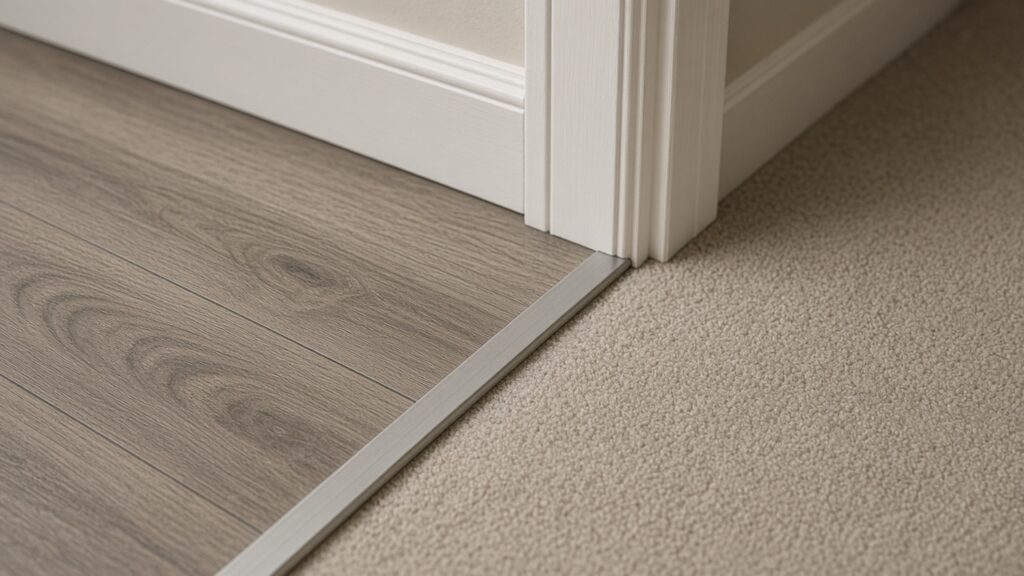
Which Transition Strip Do I Need Between Two Floors? Where two floors meet, you need a strip to cover the joint. It hides the gap, protects the edges and makes a safe step from one floor to the next. The right strip depends on one question: are the two floors the same height or not? […]
Are Carpet Tiles a Good Choice for a Basement?
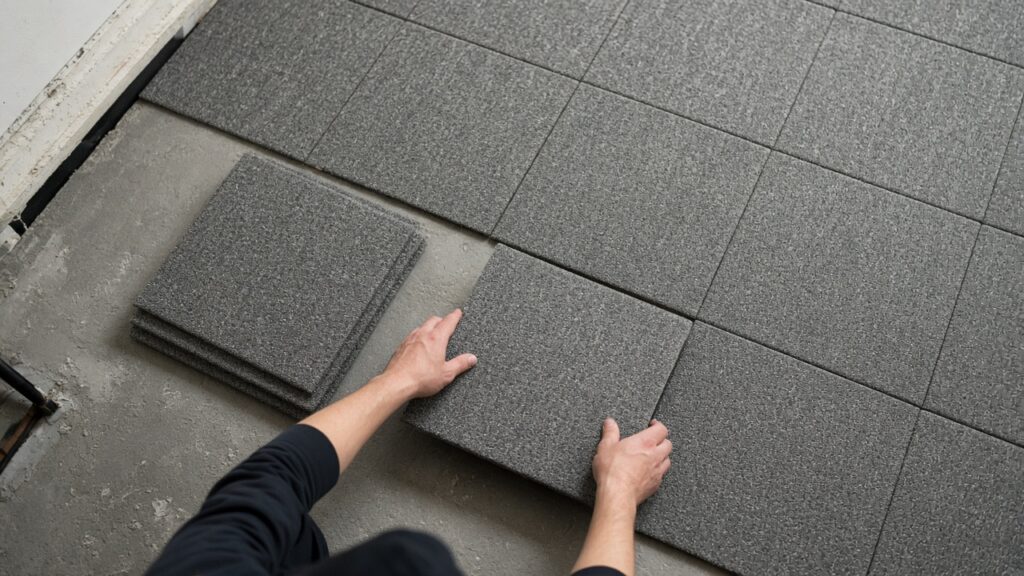
Are Carpet Tiles a Good Choice for a Basement? Carpet tiles are squares of carpet that you lay one by one, instead of one big roll. In a basement, this helps: if one area gets stained or wet, you can change a few tiles instead of the whole room. This guide explains how carpet tiles […]
How Do I Finish Basement Stairs with Vinyl Plank? Stair Nosing Explained
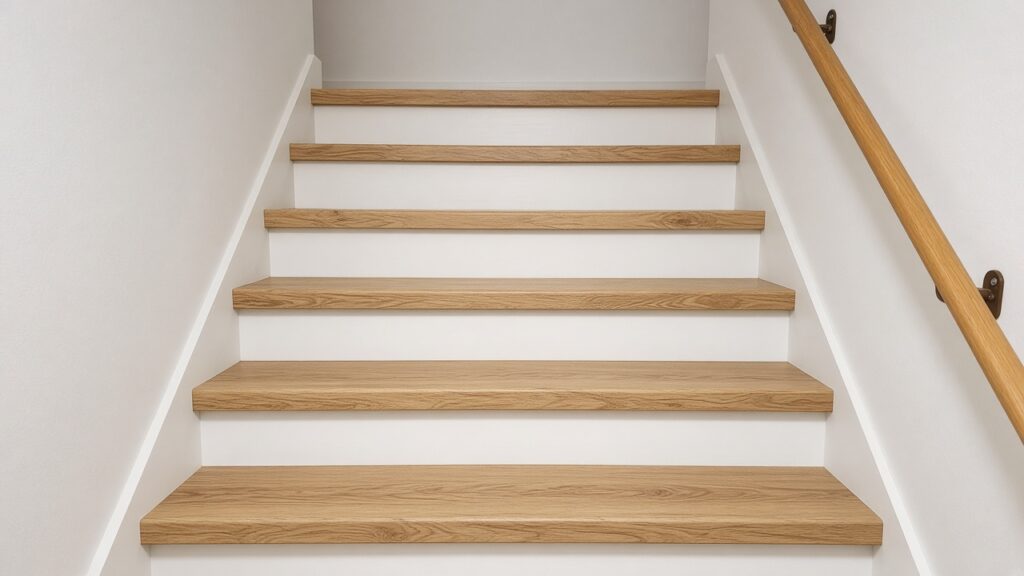
How Do I Finish Basement Stairs with Vinyl Plank? Stair Nosing Explained A new basement floor often means new stairs too. A plank alone does not finish the front edge of a step. For that, you need a stair nose: a long rounded piece that covers the edge and matches your floor. This guide explains […]
What Is Linoleum Flooring, and Is Marmoleum a Good Fit for My Basement?
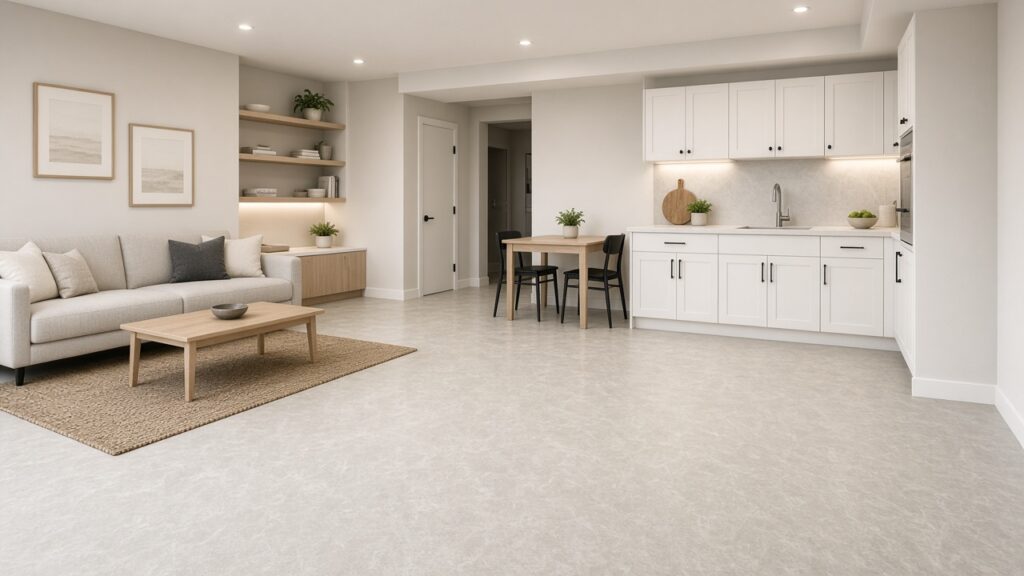
What Is Linoleum Flooring, and Is Marmoleum a Good Fit for My Basement? Linoleum is a resilient floor made mostly from natural materials. Marmoleum is the linoleum line made by Forbo. Vinyl roll looks similar but is made of plastic (PVC). All three come as a smooth surface with few seams. In a basement, linoleum […]
Waterproof or Water-Resistant Flooring: Which One Do I Need in My Basement?
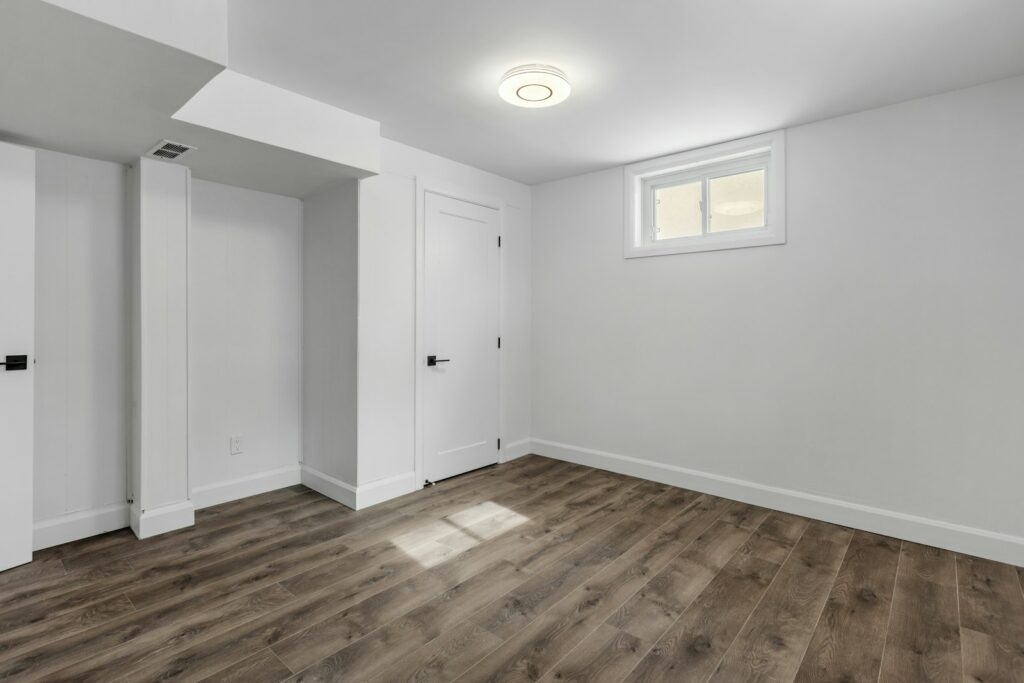
Waterproof or Water-Resistant Flooring: Which One Do I Need in My Basement? Water-resistant means a floor can handle some water for a while. Waterproof means water will not damage the plank itself. In a basement, that difference matters, because spills, damp air and a cold slab are all common. But no plank fixes a wet […]
What Is a Subfloor, and What Should Go Under My Basement Floor?
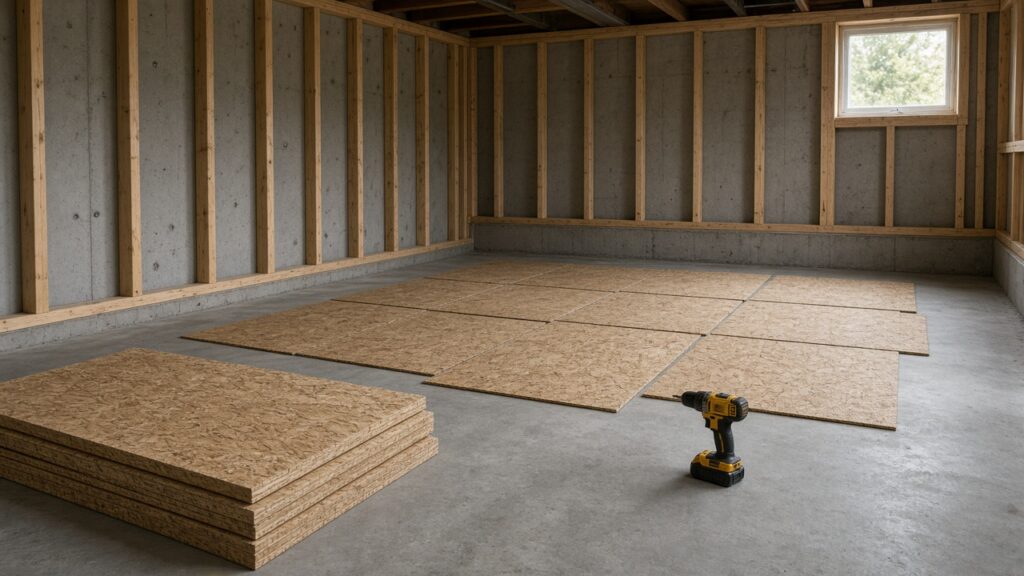
What Is a Subfloor, and What Should Go Under My Basement Floor? The subfloor is the solid layer under your finished floor. In a house upstairs, it is usually wood panels on the joists. In a basement, it is often the concrete slab itself, or panels laid on top of it. Your new floor is […]
What Are the Main Hardwood Floor Patterns, and What’s the Difference Between Herringbone and Chevron?
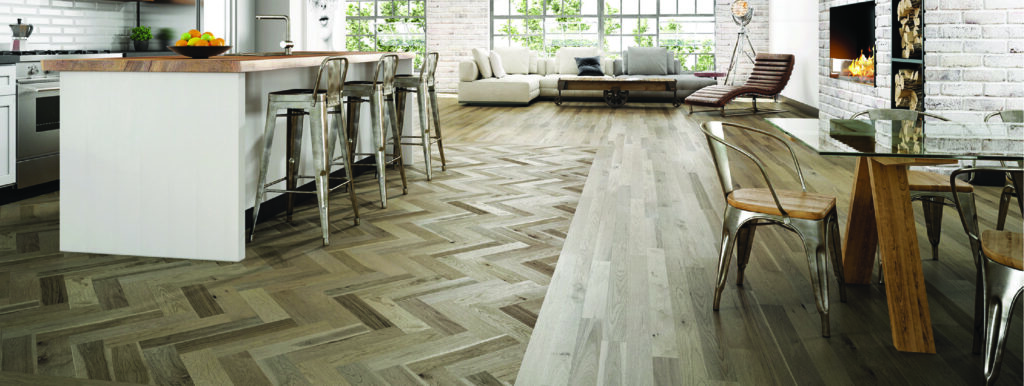
What Are the Main Hardwood Floor Patterns, and What’s the Difference Between Herringbone and Chevron? Straight planks side by side are one look. Zigzag patterns are another. Two names get mixed up all the time: herringbone and chevron. They are not the same cut. Below is the difference in plain words, then a Canadian-made engineered […]
What Is Travertine, and Is It a Good Choice for Floors?

What Is Travertine, and Is It a Good Choice for Floors? Travertine is a natural stone. It is not porcelain and it is not vinyl. On FloorBox you can buy the real stone, or buy floors that only look like it. Below is the plain-words version with one real stone tile and three look-alikes, then […]
What Is the Best Flooring for an Entryway or Hallway That Gets Snow, Slush and Road Salt in Winter?

What Is the Best Flooring for an Entryway or Hallway That Gets Snow, Slush and Road Salt in Winter? Canadian winters dump wet boots in the entry half the year. Snow, slush and road salt all end up right by the door. FloorBox lists entries among the uses on Floor Tiles. Below is what to […]
Which Is Better, LVP or LVT, and How Do I Choose Between Vinyl Plank and Vinyl Tile?
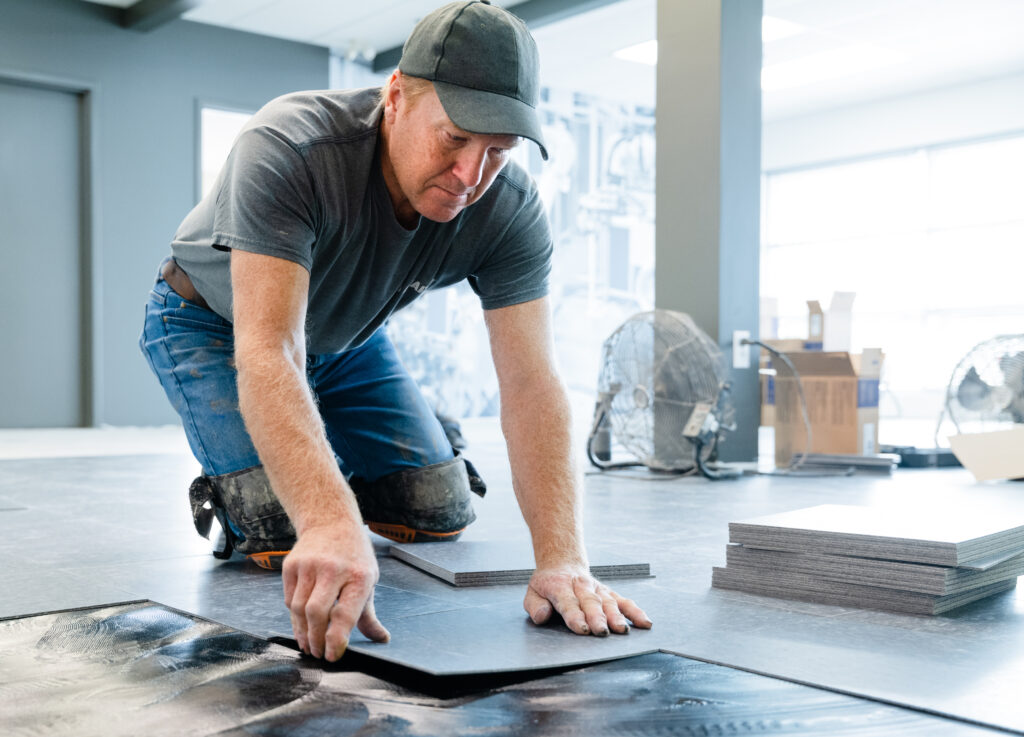
Which Is Better, LVP or LVT, and How Do I Choose Between Vinyl Plank and Vinyl Tile? LVP means luxury vinyl plank. LVT means luxury vinyl tile. The letters sound like two different materials. On FloorBox they are mostly two shapes of the same idea: a vinyl floor that looks like wood boards, or a […]