
Short answer: for stairs, pick a durable carpet, compare pile weight, and lay it over a firm underlay no thicker than 3/8 in. (10 mm). Beaulieu treats stairs as a heavy-traffic area, so read the warranty too: some exclude stairs. Each step needs a rounded edge, tack strip and a stair tool to tuck the carpet in.
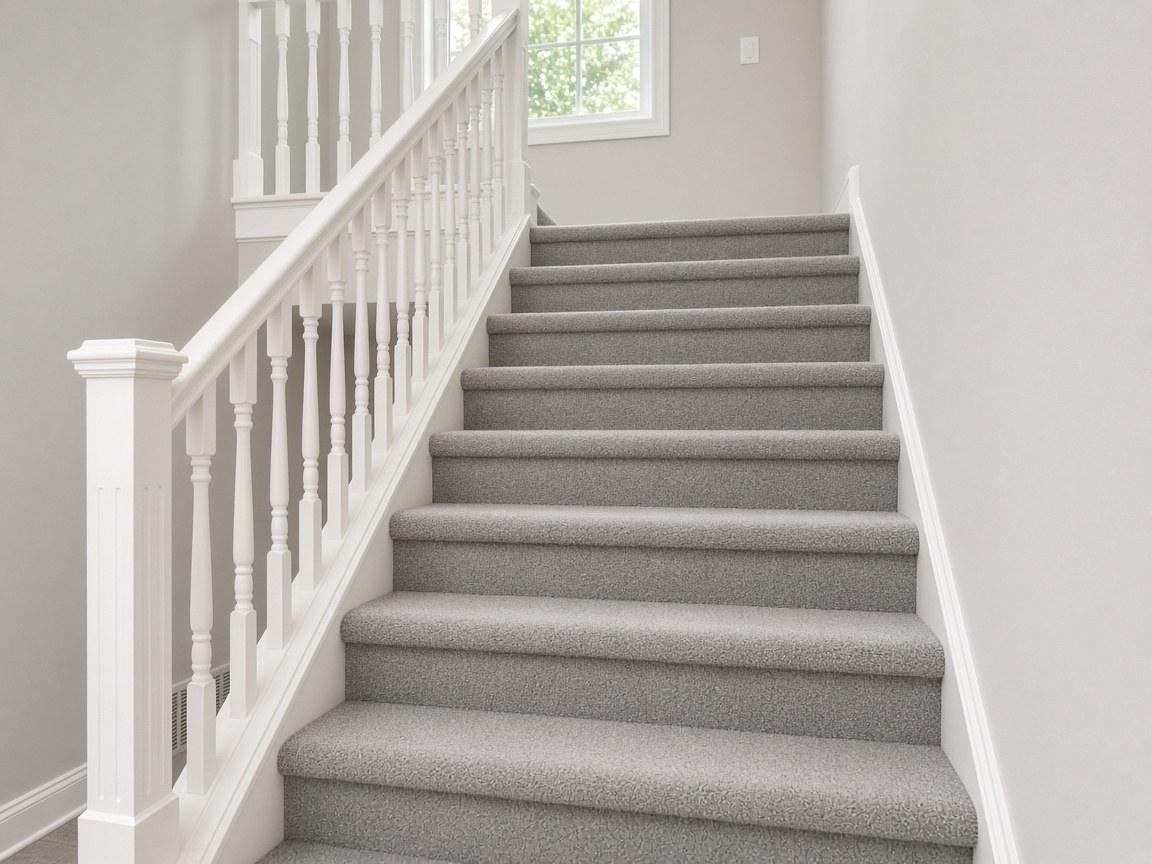
On every step, the carpet bends over the nose (the front edge of the step) and takes the full weight of a foot. The Beaulieu Carpet Care and Warranty Guide, under Warranty Documents on the Epitome Velvety Clay product page, puts "all stair applications" in its heavy-duty group (Class 2). It also suggests "a firmer underpad" for stairways.
Read the warranty before you buy. The same guide says: "This warranty excludes carpet installed on stairs." That covers wear and texture retention. So a "25-Year: Wear Resistance" line on a product page may not apply to your stairs. Open the warranty PDF under Warranty Documents on the product page and check before you order.
Start with the fiber. Our fiber guide says nylon "is not easily affected by foot traffic". The other fibers are compared in How Do I Choose a Carpet, and Which Fiber Should I Pick?
Then compare pile weight. In the product specifications, look for the "Pile Weight (oz/sqyd)" line. A higher number means more fiber in each square yard.
Two examples from our Broadloom category:
Cut pile or loop? Both are sold for stairs. What changes is the install, mostly the direction of the pile (see below).
Firm and thin. The Beaulieu General Installation Instructions, under Installation Documents on the Epitome page, call for a residential cushion of at least 6 lb density and no thicker than 3/8 in. (10 mm). The FAQ on our Carpet category page gives the same 3/8 in. maximum.
For stairs, the warranty guide asks for a heavy-duty (Class 2) underpad. Check the density and thickness of your pad against the table in your carpet's warranty guide, or contact us and we can check it with you.
On each step, the pad wraps over the face of the nose, under the carpet.
To choose a pad, see How to Choose Carpet Underlayment. Pads are in our Carpet Underlayment category.
There are two ways to finish the nose of each step:
More options are in Stair Solutions. Not sure which one fits? Contact us.
Here is what is different on stairs, from the Beaulieu installation guide:
For the full steps, see How to Install Carpet.
Carpet is fine on basement stairs: the Nature's Connection page names basements and stairs. For a hard floor that matches vinyl planks, see How Do I Finish Basement Stairs with Vinyl Plank? Stair Nosing Explained. For the basement floor itself, see Are Carpet Tiles a Good Choice for a Basement?
Browse Carpet. To see Nature's Connection 84176 on your stairs, order a sample from its product page.
Questions about pad or stair nose sizes? Contact us.
Is cut pile or loop carpet better for stairs?
Both are used on stairs: Epitome is cut pile and Nature's Connection is a level loop whose page names stairs. What changes is the install: Beaulieu's installation guide wants the pile running down the stairs, and cut pile may run up for better grip going down.
How thick should the underlay be on stairs?
Firm and thin: the Beaulieu installation instructions on FloorBox product pages say at least 6 lb density and no thicker than 3/8 in. (10 mm) for homes. The warranty guide asks for a heavy-duty (Class 2) pad on stairs.
Does the carpet warranty cover stairs?
Check before you buy. The Beaulieu Carpet Care and Warranty Guide (under Warranty Documents on the product page) excludes carpet installed on stairs for wear and texture retention.
What tool do I need to carpet stairs?
A stair tool, like the Stair Tool and Carpet Tucker 4" Extra Wide, which sets carpet into tack strips and creases it into stairway crevices. You also need tack strip on each step.
Can I put carpet on basement stairs?
Yes, if the steps are clean, dry and solid. For example, Nature's Connection: its page suggests it for basements, bedrooms or stairs.